Open post hip dysplasia

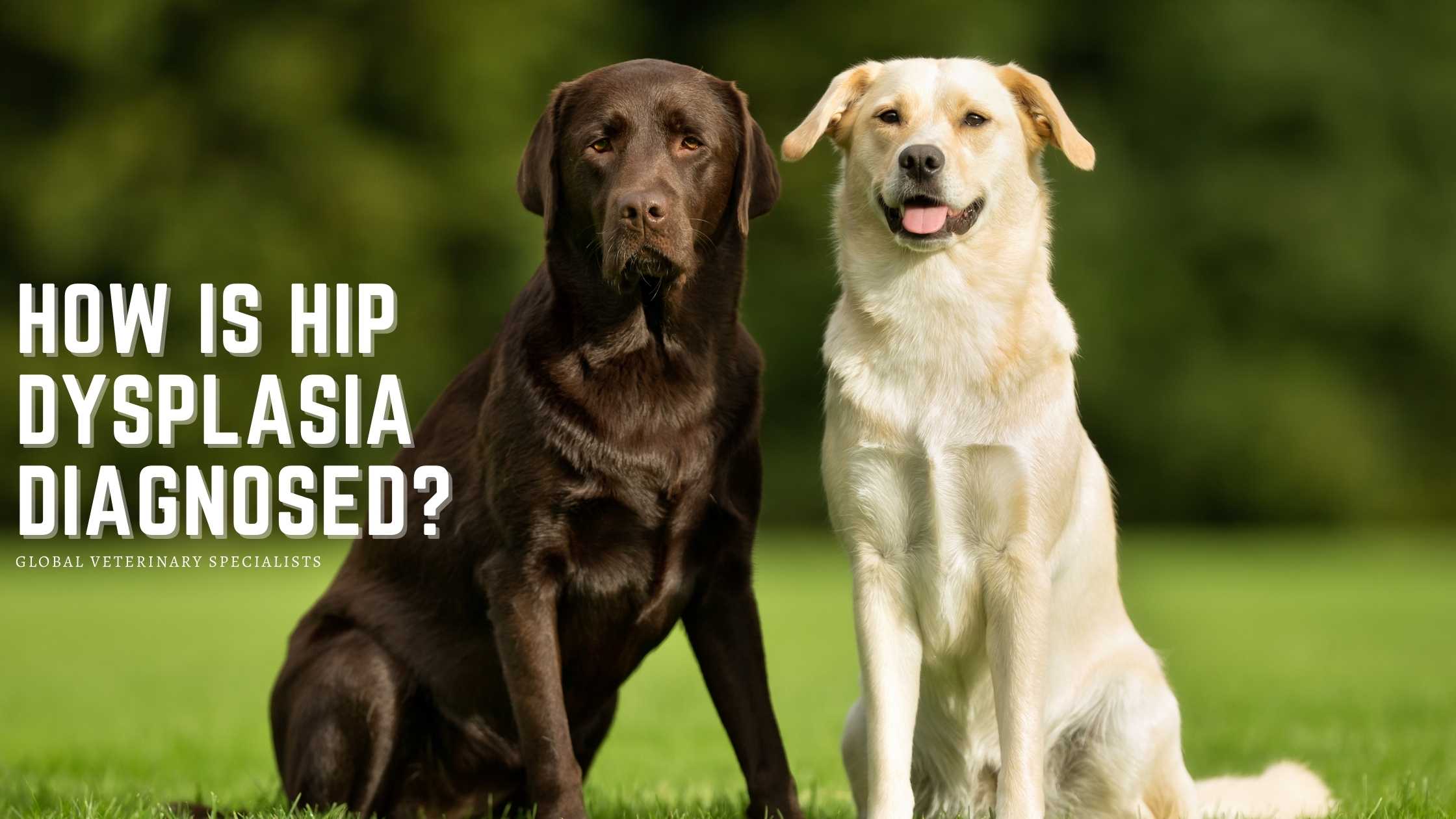
How is Hip Dysplasia Diagnosed?

Hip dysplasia (HD) is a condition that results from the abnormal development of the hip joint in which the ball does not fit snugly into the socket. It can affect both cats and dogs of any size or breed. A comprehensive examination must be completed to rule out other causes of hind lameness or conditions that could exacerbate HD. Radiographs are then obtained to confirm the diagnosis of hip dysplasia.

Other causes of hind lameness include but may not be limited to the following:

  • Hip luxation
  • Patella luxation
  • Joint infection
  • Spinal or neurological abnormalities
  • Fractures of the femoral head (the ball)
  • Trauma or injury to other soft tissue limb structures
  • Orthopedic conditions associated with developmental growth such as osteochondritis dessicans (OCD), panosteitis, or Legg-Perthes disease

The veterinarian will review the patient’s medical history and, if available, genetic background. It is essential to relay information about your pet’s nutrition, symptoms, activity level, and prescribed medications. They will also perform both a physical and orthopedic examination. 

During the orthopedic exam, the dog’s posture and ambulation are observed, and palpation is performed on all four limbs. The latter focuses on each long bone, the major joints, muscle mass, the spine, and the supporting soft tissues. The hip joint is usually examined last to rule out other causes of pain and inflammation.

Excessive joint laxity can be palpated using a diagnostic test, called the Ortolani test, in dogs who do not resist manipulation. An Ortolani sign is beneficial when grading young dogs with HD, particularly in puppies up to about eight to ten weeks, as mild laxity is normal. The Ortolani sign is an indication of hip dysplasia in dogs older than six months.

Imaging Evaluation

Because of the importance of obtaining radiographs to make an accurate diagnosis, it may be best to sedate overly excited dogs or those experiencing pain. That will allow for perfectly positioned imaging to be completed with minimal X-ray exposure. Two views, ventral-dorsal and lateral, are usually sufficient in the diagnosis of this condition.

Radiographic indications of HD include evidence that the femoral head is not seated deeply into the acetabulum – approximately 50 percent of the head should be superimposed inside the socket – and the absence of joint incongruity. Secondary osteoarthritis may or not be present and to a variable degree of severity. 

The severity of the laxity and, if present, arthritis must be determined by obtaining views of both hips. The combination of both the clinical and radiographic findings is essential for selecting the best treatment options. A total hip replacement (THR) is often recommended in animals with moderate to severe HD.

What Are the Signs of Hip Dysplasia?

Common symptoms include:

  • Limping
  • Decreased activity
  • A “bunny hop” gait
  • Difficulty rising after rest
  • Hesitance to jump or climb stairs
  • Premature tiring, especially during exercise
  • Weight shifting from one or both hind feet
  • Slightly arched back, resulting from weight shifting

Schedule an Exam Appointment Today

Global Veterinary Specialists recognize that dogs and cats encounter orthopedic injuries, disabling difficulties, and diseases that can impact their quality of life and are committed to restoring mobility by treating hip dysplasia and other complex problems. Each GVS surgeon has more than twenty years of veterinary and surgical experience.

We are teachers, mentors, inventors, clinical researchers, and veterinary surgeons driven to achieve excellent results for every animal we see regardless of their age or breed. Please contact us today to learn about the various options for treating hip dysplasia and how we can help restore your pet’s quality of life.
Open post total hip replacement for dogs

The Rewards of Total Hip Replacement for Dogs

The most common reason for performing a total hip replacement for dogs is to alleviate pain and restore motion in companion animals that have been diagnosed with severe degenerative joint disease secondary to hip dysplasia. Additional indications for this surgery include:

  • Coxofemoral luxation that is not amendable to either closed or open reduction
  • Capital epiphyseal and femoral neck fractures that cannot be repaired
  • Coxofemoral arthritis secondary to acetabular or femoral malunions
  • Avascular necrosis of the femoral head (Legg-Perthes Disease)
  • Painful previously performed femoral head ostectomies

What Are the Benefits of THR?

A common cause of hind limb lameness, hip dysplasia can impact your pet’s quality of life, resulting from inflammation and pain. One of the most apparent benefits associated with a total hip replacement for dogs is dramatic pain relief. Almost all our patients experience incredible results, resuming a healthy, pain-free life. Many of our patients have even achieved a greater range of motion and discontinuation of limping.

Success Rate of Total Hip Replacement for Dogs

This surgical procedure’s success rate is incredibly high, with more than 95% of our patients regaining normal, pain-free function of their hip joint. That is expected to remain fully functional for a minimum of ten years, but under normal conditions, most of our patients do not experience a repeated occurrence of pain for the rest of their lives. Global Veterinary Specialists has followed over 650 THR recipients throughout their lifespan following surgery.

It is critical to follow postoperative care instructions, including temporarily restricting activities, to prevent complications. Still, most animals can resume normal activities following a total hip replacement for dogs. However, some high-agility sports such as agility or flyball may best be avoided, especially if your pet did not participate in those activities’ before surgery.

Global Veterinary Specialists recognize that dogs and cats encounter orthopedic injuries, disabling difficulties, and diseases that can impact their quality of life. Each GVS surgeon has more than twenty years of experience treating complex problems that may arise in your pets.

We are teachers, mentors, inventors, clinical researchers, and veterinary surgeons driven to achieve excellence for every animal we see. Please contact us today to learn how we treat hip dysplasia and restore your pet’s quality of life.

Resources:

“Outcomes for total joint replacement in dogs and cats.” Global Veterinary Specialists.

Open post Hip dysplasia

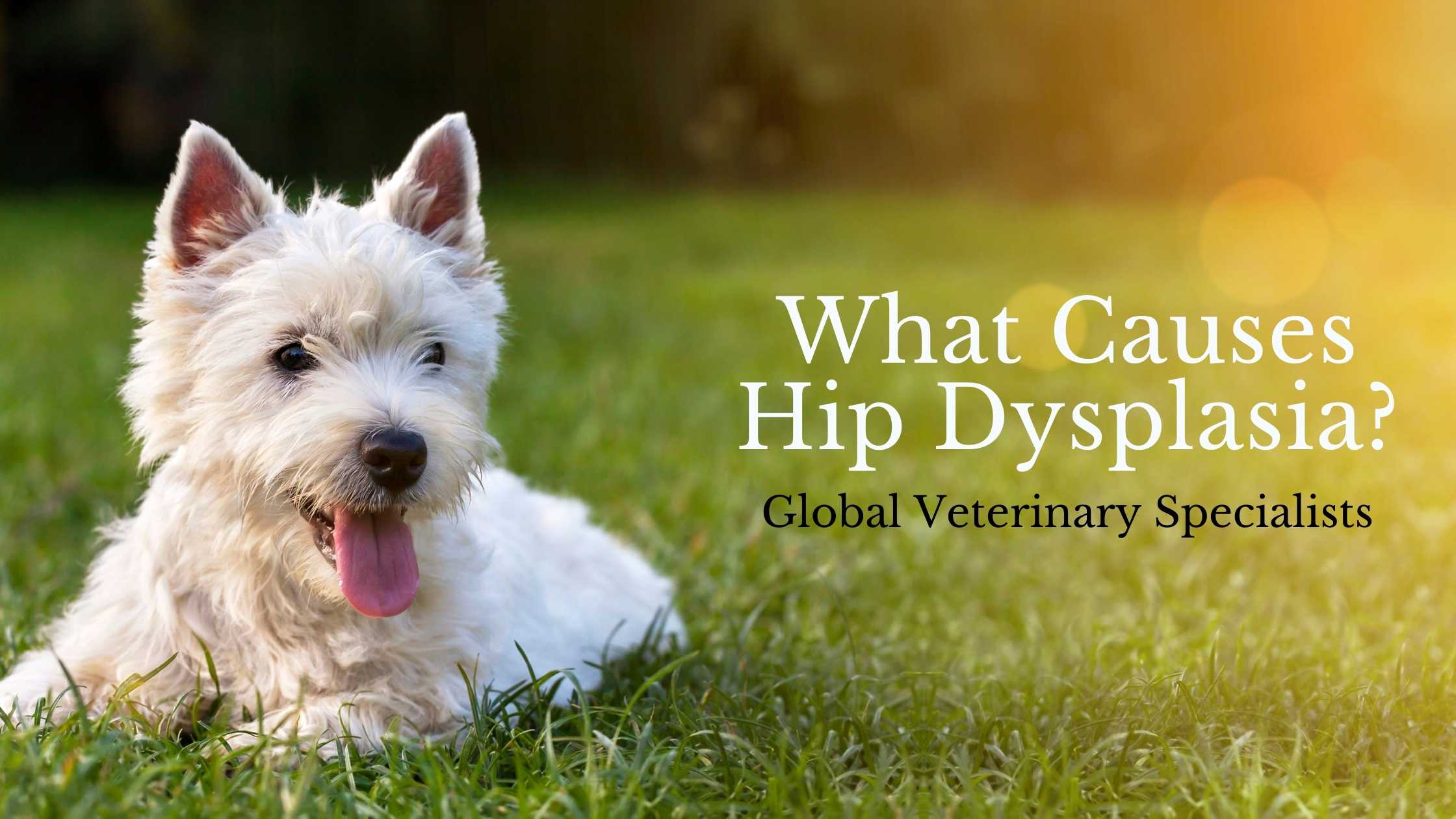
What Causes Hip Dysplasia?

Hip dysplasia (HD) is characterized by abnormal laxity of the hip joint, in which the ball and socket do not fit correctly, resulting in irregular wear of the joint surfaces. The condition leads to inflammation, pain, and lameness and may ultimately necessitate surgical intervention.

The cause of hip dysplasia is multifactorial. That means several factors can contribute to its development, with the single most significant reason believed to be genetics. Extensive research will continue on the canine genome to identify the exact hereditary code that is abnormal. Additional factors that can influence its development include diet, hormones, and the environment.

Although middle to large breed dogs – especially those popular in the United States – are more prone to hip dysplasia, its development may also affect smaller canines, including mixed breeds and even felines. Animals can present with mild, moderate, or severe cases of hip dysplasia.

Symptoms of Canine Hip Dysplasia

While some dogs can begin to show signs of HD as early as six months of age, most exhibit symptoms by one year of age. Before starting to progress gradually, symptoms are often subtle, although this may vary depending on the severity and any underlying conditions. Common symptoms your dog may exhibit include:

  • Limping
  • Decreased activity
  • A “bunny hop” gait
  • Difficulty rising after rest
  • Hesitance to jump or climb stairs
  • Premature tiring, especially during exercise
  • Weight shifting from one or both hind feet
  • Slightly arched back, resulting from weight shifting

Over time, primarily in situations where hip dysplasia is left untreated, secondary osteoarthritis (OA) can develop. In secondary osteoarthritis, the inflamed tissues surrounding the abnormal joint may thicken with scar tissue, further impacting the dog’s quality of life. Early treatment by a veterinary surgeon is essential.

Schedule an Appointment with a Veterinary Surgeon

Global Veterinary Specialists recognize that dogs and cats encounter orthopedic injuries, disabling difficulties, and diseases that can impact their quality of life. Each GVS surgeon has more than twenty years of experience treating complex problems that may arise in your pets.

We are teachers, mentors, inventors, clinical researchers, and veterinary surgeons driven to achieve excellence for every animal we see. Please contact us today to learn how we treat hip dysplasia and restore your pet’s quality of life.

Open post hip dysplasia

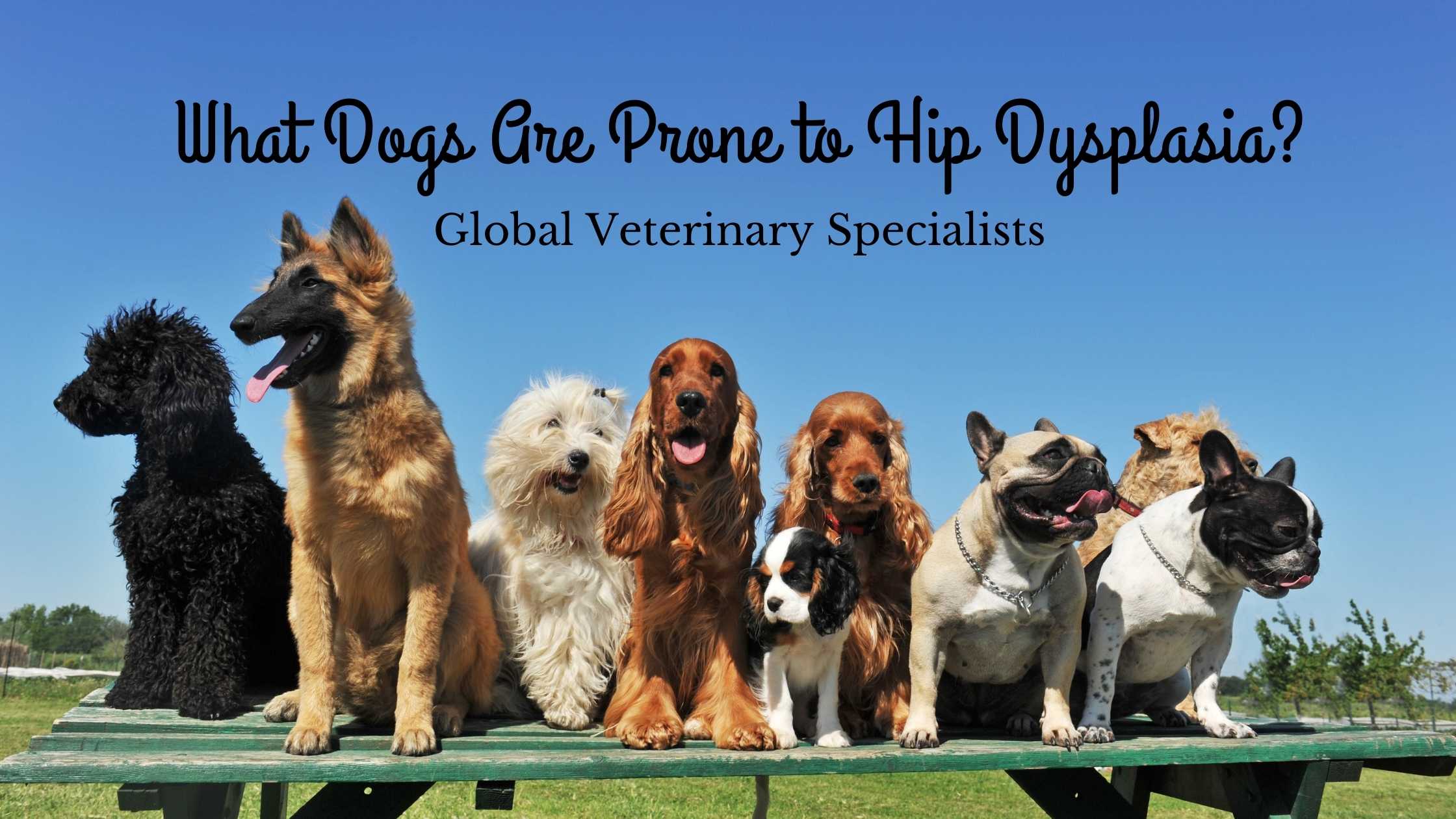
What Dogs Are Prone to Hip Dysplasia?

Hip dysplasia (HD), while more common in popular medium and large breeds, can reduce the quality of life for dogs of any size or breed. The condition has also been reported in cats. Although the exact cause is multi-factorial, it develops when the bones and soft tissues develop at a disproportionate rate, resulting in abnormally shaped bones. These abnormalities inhibit the ball and socket from fitting together as they should, causing joint laxity, leading to inflammation and lameness.

HD is most seen in these dog breeds:

  • Labrador Retriever
  • Mixed Breed Dog
  • Golden Retriever
  • German Shepherd
  • Rottweiler
  • Australian Shepherd
  • Border Collie
  • German Short Hair Pointer
  • Cavalier King Charles Spaniel
  • Pug
  • Jack Russel Terrier
  • Chow Chow
  • Springer Spaniel
  • Old English Sheepdog
  • Pit Bull Terrier
  • Boxer
  • Shetland Sheepdog
  • Newfoundland
  • Great Pyrenees
  • Bernese Mountain Dog
  • Siberian Husky
  • Akita
  • Malamute
  • Airedale Terrier
  • Keeshond
  • Samoyed
  • Standard Poodle

However, it is essential to remember that HD can occur in dogs of any breed or size and cats.

Diagnosing and Treating Hip Dysplasia

A diagnosis of hip dysplasia is made after the completion of a comprehensive physical and orthopedic examination. The patient’s history is also reviewed to determine if other causes of hind limb lameness are present. Final diagnosis is made only after radiographs are obtained and reviewed. Treatment options, which usually vary depending on the individual animal, are then discussed.

One of the best treatment options to consider is a total hip replacement (THR).

A THR is designed to eliminate pain and restore function that mimics normal function immediately. It is regarded as the gold-standard surgical option for treating dogs and cats diagnosed with HD, mainly when the condition is moderate or severe. Global Veterinary Specialists skilled, board-certified veterinary surgeon, Dr. Liska has successfully performed more than 100 THR procedures on dogs and cats of all sizes.

Schedule an Appointment Today

Global Veterinary Specialists recognize that dogs and cats encounter orthopedic injuries, disabling difficulties, and diseases that can affect their quality of life. Each GVS surgeon has more than twenty years of experience treating complex problems that may arise in your pets.

We are teachers, mentors, inventors, clinical researchers, and surgeons driven to achieve excellence for every animal. Please contact us today to learn how we can help restore your pet’s quality of life.
Open post Hip Surgery for Dogs THR or FHO

Hip Surgery for Dogs: THR or FHO?

Treatment options range from conservative medical pain management to surgical intervention. Of the latter, options for hip surgery for dogs diagnosed with hip dysplasia include Total Hip Replacement (THR) and Femoral Head Ostectomy (FHO), which we discuss below. It is best to speak with your veterinary surgeon about all available options before making a decision.

Total Hip Replacement (THR)

Total hip replacement (THR) can be used in dogs and cats of any size with moderate to severe hip dysplasia once skeletal maturity has been reached, usually between nine and twelve months of age. This procedure’s timing is made individually and only after a comprehensive orthopedic exam with radiographs.

THR is considered the gold standard surgical option, as it effectively and permanently eliminates pain, restoring the hip joint’s normal function.

This procedure involves replacing the ball and socket with titanium, cobalt, and ultra-high molecular weight polyethylene implants. These implantations are cemented in small dogs, usually weighing less than 25 pounds, and cementless in medium and large canines. You can find more specific information regarding the implants by clicking here.

Femoral Head Ostectomy (FHO)

Another option is a femoral head ostectomy (FHO). This hip surgery for dogs can be performed at any age to reduce discomfort, although the pain relief is often unpredictable, and rehabilitation time is prolonged. According to the American College of Veterinary Surgeons, it is performed on dogs weighing less than 70 pounds.

Because the ball is removed in this procedure, significant restraints on the dog’s activity and weight are required to prevent complications. Additional disadvantages also exist. A veterinary surgeon’s primary surgical recommendation is a total hip replacement to eliminate hip pain and a return to normal function.

Schedule an Appointment Today

Global Veterinary Specialists recognize that dogs and cats encounter orthopedic injuries, disabling difficulties, and diseases that can affect their quality of life. Each GVS surgeon has more than twenty years of experience treating complex problems that may arise in your pets.

We are teachers, mentors, inventors, clinical researchers, and surgeons driven to achieve excellence for every animal. Please contact us today to learn how we help restore your pet’s quality of life.
Resources:

“Canine Hip Dysplasia: Treatment.” The American College of Veterinary Surgeons.

“Femoral Head Ostectomy.” Global Veterinary Specialists.

“What is Hip Dysplasia?” Global Veterinary Specialists.

Open post hip dysplasia

Hip Dysplasia in the Winter

Your pet may feel more discomfort during the winter since temperatures have dropped and may show more or worsening symptoms if they have been diagnosed with hip dysplasia. It is essential to be conscious of your pet’s health, safety, and comfort when it is cold outside to ensure that they, too, have the happiest of holidays.

What is Hip Dysplasia?

Hip dysplasia (HD) is a condition of abnormal laxity of the hip joint. This laxity stretches tissues surrounding the hip joint and causes inflammation, pain, and hind limb lameness. Over time, as the condition progresses, it can lead to secondary osteoarthritis.

The cause of HD is multifactorial: Genetics, diet, hormonal influence, and environmental factors are all believed to contribute to its development. While hip dysplasia commonly affects large breeds, it can also occur in dogs of all breeds and sizes, and even in cats.

Available treatment options include pain management and total hip replacement (THR). Because THR results in a fully functional, pain-free joint, it is considered the gold-standard surgical option for dogs and cats with moderate to severe HD.

Winter Tips for Your Pet

Here are some tips for keeping your pet safe and comfortable during the winter.

  • Know their limits.
  • Keep your pets indoors.
  • Reduce the frequency of baths.
  • Don’t shave your dog down too much.
  • Consider a sweater for short-haired dogs.
  • Schedule a veterinary appointment if your dog is showing any of the symptoms of HD.

The American Veterinary Association also recommends wiping your pet’s feet, legs, and belly after walks to remove any chemicals that may have been on the ground. Doing this after each walk will prevent the risk of skin irritation or animal poisoning.

Schedule an Appointment Today

Global Veterinary Specialists recognize that dogs and cats encounter orthopedic injuries, disabling difficulties, and diseases that can affect their lives. Each GVS surgeon has more than twenty years of experience treating complex problems that may arise in your pets.

We are teachers, mentors, inventors, clinical researchers, and surgeons driven to achieve excellence for every animal. Please contact us today to learn how we can help restore your pet’s quality of life.
Resources:

“Cold Weather Animal Safety.” The American Veterinary Medical Association (AVMA).

“Cold Weather Safety Tips.” The American Society for the Prevention of Cruelty to Animals (ASPCA).

Open post veterinary

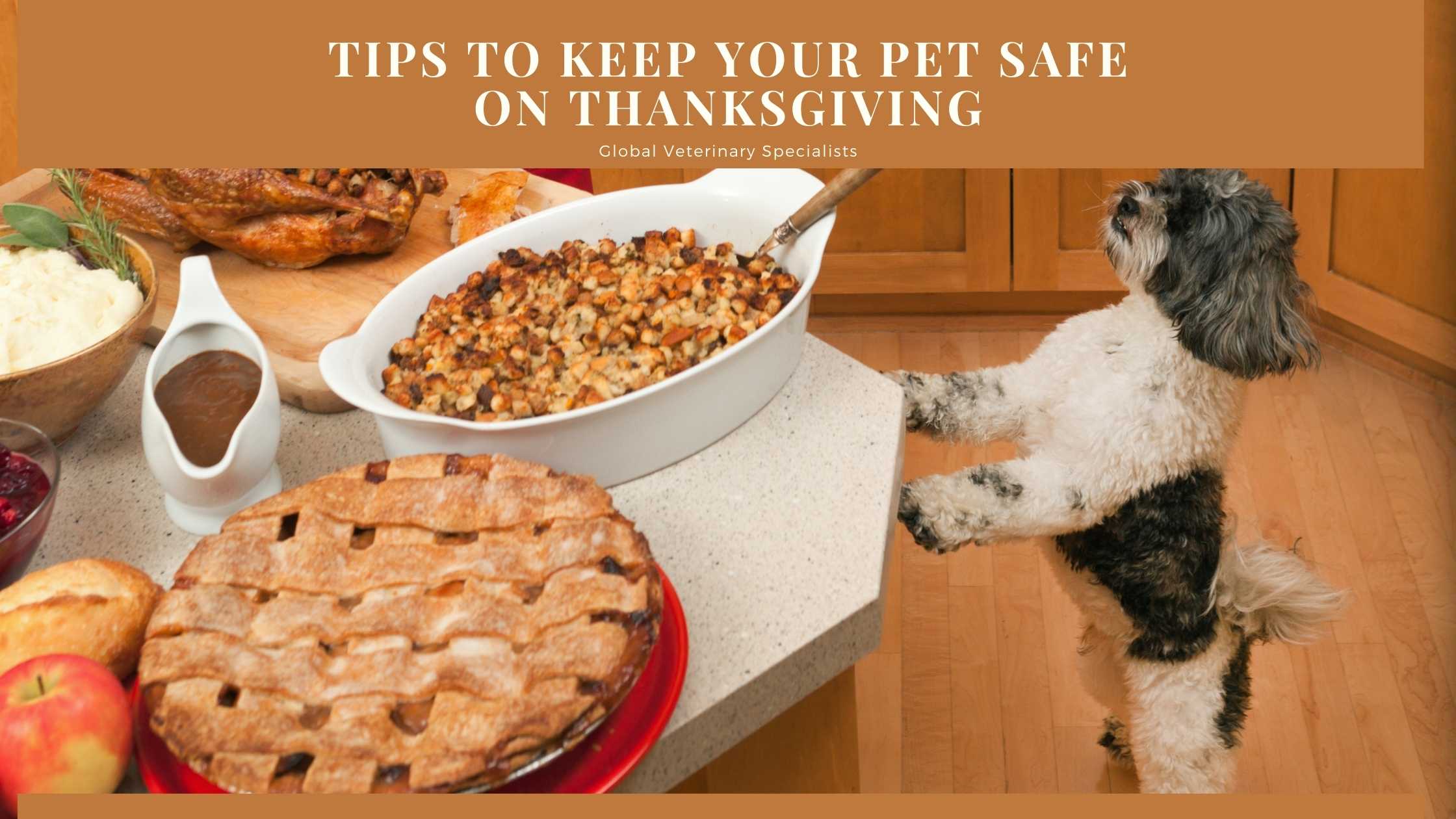
Tips to Keep Your Pet Safe on Thanksgiving

Thanksgiving is on Thursday, November 26, this year. It is a time to connect with friends and family, watch the Macy’s Thanksgiving Day parade, and express gratitude. However, you choose to celebrate the day; taking extra steps to ensure safety, including your pets’ safety, is essential. The following tips will help prevent having to make an emergency veterinary appointment.

Thanksgiving Day Favorites

Thanksgiving Day is a national holiday celebrated annually on the fourth Thursday of November since 1939. Before then, according to History, it was celebrated on the fifth Friday of the month.

Many people focus on gathering with friends and family to give thanks and feast on holiday favorites. Whole turkeys, sliced thin, and stuffing and mashed potatoes are often the main dishes at the holiday table. Many of these staples should not be shared with your pet, no matter how much your s/he begs, without taking some necessary precautions.

Additionally, some special activities include watching parades and beginning to put up decorations for the winter holiday. You may also enjoy watching classic films centered around Thanksgiving.

Tips to Keep Your Pets Safe

Boneless Only Please

According to the ASPCA, while it is acceptable to give your pet a small bite of turkey, it is crucial to make sure it is thoroughly cooked and is boneless. Please avoid giving your dog turkey legs or wings as the “bones can be problematic for the digestive tract.”

No Sweets for Your Pet

As mentioned in our previous blog, “Halloween Safety Tips for Your Pets,” sweets are only for human consumption. Pies, sweet bread, and other deserts should not be offered to your pets. These can cause stomach upset or, worse, a life-threatening emergency. Any raw dough also receives a resounding no.

Keep Poinsettias Out of Reach

Poinsettias, while beautiful, are toxic to pets. They are just one of many plants on ASPCA’s list of toxic and non-toxic plants. If you decide to display these in your home, please prevent your pet from reaching them. You may also want to keep the ASPCA poison control number – (888) 426-4435 – easily accessible.

Global Veterinary Specialists

Global Veterinary Specialists recognize that dogs and cats encounter orthopedic injuries, disabling difficulties, and diseases that can affect their lives.

Each GVS surgeon has more than twenty years’ experience handling the most complex problems, including hip dysplasia, that may arise in your pets.

We are teachers, mentors, inventors, clinical researchers, and surgeons driven to achieve excellence for every animal.

Please contact us today to learn how we can help restore your four-legged family member’s quality of life.

Resources:
American Society for the Prevention of Cruelty to Animals (ASPCA). (2020). “Thanksgiving Safety Tips.”
History. (2020, November 20). “Thanksgiving 2020.”
History. (2019, November 21). “Thanksgiving: Fact or Fiction.”
Open post hip dysplasia

Halloween Safety Tips for Your Pets

With Halloween 2020 just three days away, it is essential to ensure your safety and that of your family and pets as you finalize plans for the evening’s costumes and activities, whether virtual or in-person. Dogs suffering from hip dysplasia, depending on the severity, may require special attention to prevent exacerbating their condition.

We invite you to continue reading to learn Halloween’s history and ways to ensure your pets remain safe.

The History of Halloween

According to History, Halloween began more than 2,000 years ago with the Celtic festival of Samhain (pronounced “sow-in”). It was a time for celebration as the harvest had ended, and a new year was beginning. Bonfires were built, and costumes were worn to ward off spirits during the festival as well.

Fast forward to the adoption of All Saint’s Day, also called All Hallows and later All-Hallows Eve, in the ninth-century. Halloween evolved from All-Hallows Eve.

The day is now celebrated with various festivities ranging from carving, stenciling, or painting pumpkins; dressing in costume; and trick-or-treating. The National Retail Federation lists dressing pets, whether felines or canines, in costumes resembling anything from delivery drivers to hot dogs one of the most popular activities.

That brings us to an essential safety tip. If you are one of the more than 266 thousand people planning to dress your pet in a costume, make sure it is the appropriate size and only keep it on your pet for a minimal amount of time, such as the time it takes to snap a few photos of your best friend.

Additional Ways to Keep Your Pets Safe

Keep Treats Out of Reach

Please remember that candy is for human consumption only. Many sweets, especially all forms of chocolate, can be hazardous to the health of your pet. The Humane Society of the United States recommends keeping the ASPCA Animal Poison Control Center hotline handy, just in case: (888) 426-4435.

Keep Your Pet on a Leash

While it would best to secure your pets indoors, make sure they are leashed if you plan to take them out. Leashing your dog, especially if diagnosed with hip dysplasia, is crucial regardless of the time of year or activity. You should also ensure that the information on your dog’s ID tags and microchip registration is up-to-date.

Canine Hip Dysplasia Treatment

Global Veterinary Specialists recognize that dogs and cats encounter orthopedic injuries, disabling difficulties, and diseases that can affect their lives.

Each GVS surgeon has more than twenty years’ experience handling the most complex problems, including hip dysplasia, that may arise in your pets.

We are teachers, mentors, inventors, clinical researchers, and surgeons driven to achieve excellence for every animal.

Please contact us today to learn how we can help restore your four-legged family member’s quality of life.

Resources:
“Halloween 2020.” History.
“Halloween Retail Holiday and Seasonal Trends.” The National Retail Federation (NRF).
“Halloween Safety Tips for Pets.” The Humane Society of the United States.
Open post Your-Questions-Answered-by-a-Veterinary-Surgeon

Your Questions, Answered by a Veterinary Surgeon

A veterinary surgeon will not hesitate to recommend and perform total hip replacement (THR) surgery when the indications for surgical intervention are present, and no other higher priority problems exist. Here are some of the most common questions pet owners ask, answered by a skilled and experienced veterinary surgeon.

What breeds are more susceptible to hip dysplasia?

Hip dysplasia commonly affects large dog breeds such as Labrador Retrievers, Golden Retrievers, Australian Shepherds, German Shepherds, Border Collies, and Rottweilers. Giant breeds such as Great Danes and Mastiffs are also more susceptible. That is not to say that other breeds or sizes of dogs cannot be impacted by hip dysplasia. There are more than 100 breeds in the total hip replacement registry, including some cats.

How can I tell if my dog is in pain?

Unlike humans, your four-legged friends are unable to speak up and say, “I am in pain.” However, there are various ways for them to clue you into their discomfort, such as whining or sleeping more. Additional signs that your pet may be in pain – especially if they have been diagnosed with hip dysplasia – include difficulty getting up, limping, a diversion to playtime, or a lack of appetite. They may also protect the painful area.

How is canine total hip replacement surgery determined?

The determination of your pet’s need for total hip replacement is made after all other options, including pain management, have been exhausted or when the patient’s quality of life is low due to chronic pain. The decision is based on the animal’s medical history, physical examination, radiographs, and blood work. Your pet must be healthy overall to be considered a good surgical candidate.

Are there size or age limitations for a total hip replacement?

Total hip replacement surgery has been successfully performed on small, medium, large, and giant breed dogs. It has also been performed on cats. Implants are available in a broad range of sizes. Ideally, your pet must reach skeletal maturity, typically occurring at about nine to ten months of age. Though, under some circumstances, it may be performed on dogs six months old. THR immediately creates a pain-free joint and restores function that mimics normal function.

How do I schedule a consultation with a veterinary surgeon?

Global Veterinary Specialists recognize that dogs and cats encounter orthopedic injuries, disabling difficulties, and diseases that can affect their lives.

Each GVS surgeon has more than twenty years’ experience handling the most complex problems that may arise in your pets.

We are teachers, mentors, inventors, clinical researchers, and surgeons driven to achieve excellence for every animal.

Please contact us today to learn how we can help restore your four-legged family member’s quality of life.

Resources:
“How to Tell if Your Dog is in Pain.” American Animal Hospital Association (AAHA).
Open post Caring-for-Your-Pet-After-Hip-Surgery

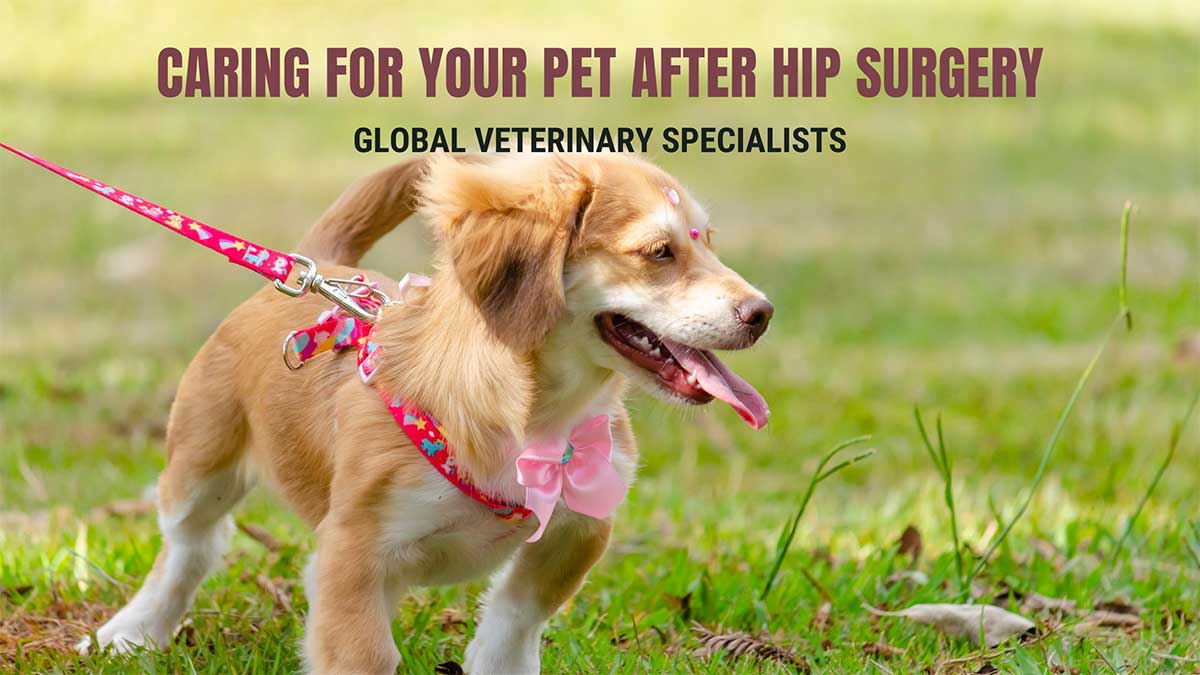
Caring for Your Pet After Hip Surgery

Hip surgery for dogs is used to restore mobility in dogs with moderate to severe hip dysplasia. A total hip replacement (THR) is an optimal choice. It may also be considered when the cost of pain management is or has become prohibitive. 

The procedure involves removing the femoral stem, femoral head, and acetabulum. They are then replaced with prosthetic components. These components are composed of either titanium or cobalt-chrome stainless steel and ultra-high molecule weight polyurethane.

Unilateral hip surgery for dogs – bilateral procedures are rarely performed consecutively – takes about 60 to 90 minutes in which your pet is continually monitored.

THR is an effective treatment option for animals weighing between 3.5 and 180 pounds and at any age once skeletal maturity is reached. It will successfully allow your dog or cat to resume a healthy, happy, and normal life.

Recovery and Healing

Your pet’s comfort, safety, and recuperation are vital after hip surgery for dogs. You’ll want to choose an attended area of your home with excellent traction for your dog to recuperate.

When outdoors, they must be on a leash for about five to six weeks. At least initially, walking should be limited to as long as needed before progressing to longer stretches. A walking assist sling will be provided.

Running, jumping, playing, and climbing stairs are not allowed during the first few weeks. A follow-up appointment with x-rays will be scheduled immediately following this recuperative period.

A customized rehabilitation program, which includes two to three daily walks, will then begin. That program is specially developed for each dog with time, duration, and distance parameters established for each day.

Your dog is usually allowed to resume regular activity within thirty days after the follow-up radiographs. That is within about ten weeks post-surgery.

For more information on what you can expect following hip surgery for dogs, please click here.

Schedule an Appointment Today

Global Veterinary Specialists recognize that dogs and cats encounter orthopedic injuries, disabling difficulties, and diseases that can affect their lives.

Each GVS surgeon has more than twenty years’ experience handling the most complex problems that may arise in your pets.

We are teachers, mentors, inventors, clinical researchers, and surgeons driven to achieve excellence for every animal.

Please contact us today to learn how we can help restore your four-legged family member’s quality of life.

Scroll to top